
The Collector's Guide: Cleaning

How to Clean Botanical Paper Sculptures
Welcome to The Collector's Guide, a series exploring how to live with botanical paper sculptures. Over the coming months, I'll be answering some of the questions collectors ask most often, from cleaning and durability to display and longevity.
Let's begin with a practical one:
"Do paper flowers gather dust?"
Meet The Tomato Plant.
It's a fair question.
When people first encounter botanical paper sculptures, they often wonder how they are cared for, whether they require special maintenance, and what living with them is actually like over the years.
The honest answer is that I have rarely needed to clean the botanical paper sculptures in my own home.
This is not because I live in an immaculate house. In fact, I live in a rather drafty period home that seems remarkably good at attracting dust. Yet the pieces have never required the sort of regular maintenance people often imagine.
Perhaps it is because I frequently move them around while styling rooms or photographing new work. Whatever the reason, dust has never become a significant issue.
If I did need to remove dust, these are the methods I would recommend.
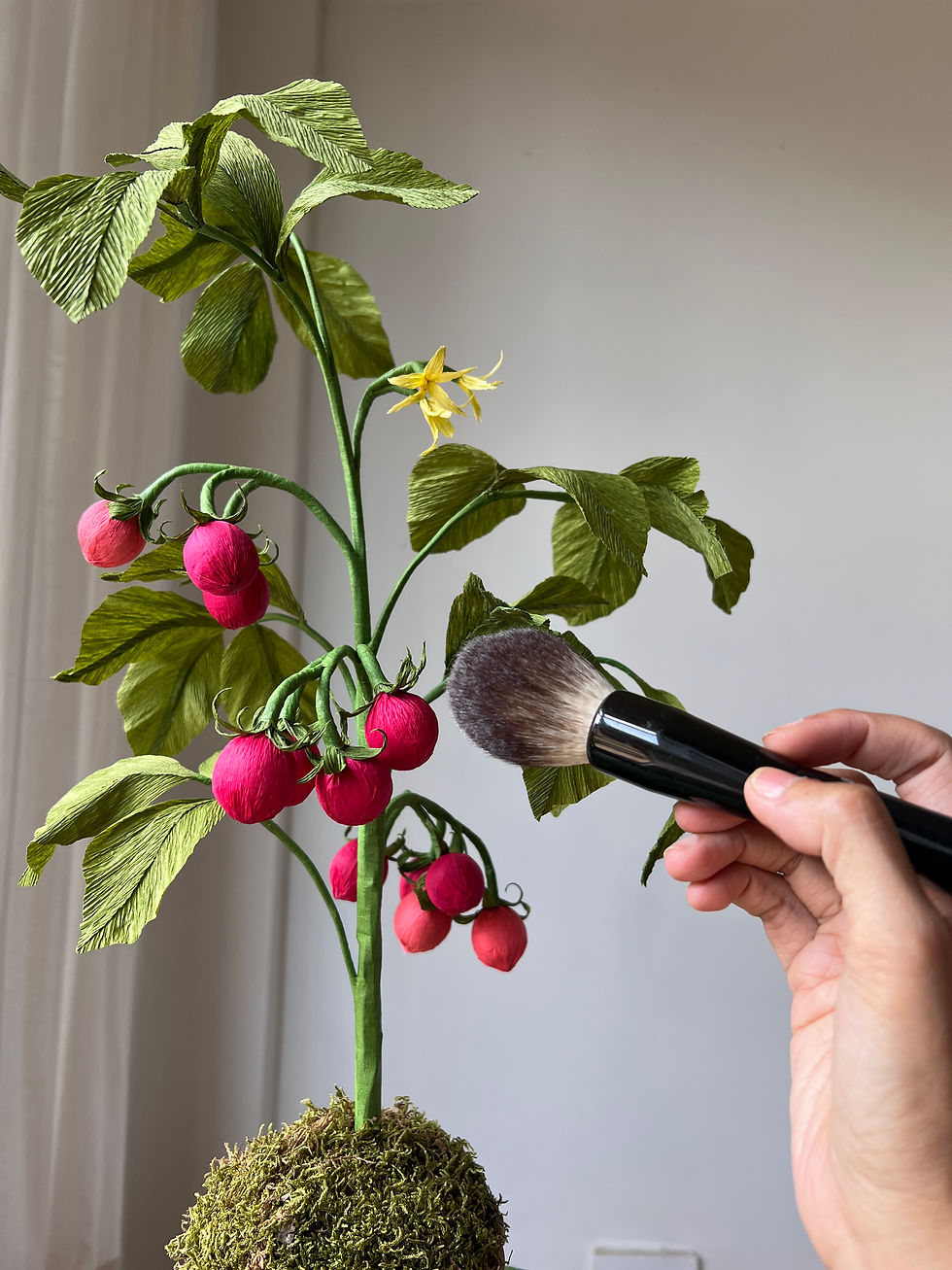
1. Use a Soft Makeup Brush
A clean makeup brush is one of the gentlest tools you can use.
A blusher brush works particularly well, as do some beard and moustache brushes.
Simply sweep the bristles lightly across the petals and foliage to lift away any surface dust. The soft fibres are excellent for reaching delicate textures without disturbing the form of the sculpture.
2. Use a Soft Toothbrush
This often surprises people.
Although these sculptures are made from paper, they are far more robust than many expect.
A soft toothbrush can be used to gently remove dust from leaves, stems, and more intricate areas of a piece. I would recommend supporting the area being brushed with your hand, particularly if you are working on a thin leaf or petal.
The paper can comfortably withstand light brushing and occasional handling.
3. Use a Dust Blower
A bulb air blower or small electric dust blower is particularly useful for flowers with intricate centres or tightly clustered petals.
It can help remove dust from places that are difficult to reach with a brush.
This method works especially well for smaller blooms such as snowdrops and lily of the valley, where dust may settle deep within the flower.

4. Use Cool Air from a Hairdryer
If a piece has been displayed for a long period, a hairdryer on its lowest setting with cool air can help remove light surface dust.
Keep the airflow gentle and maintain a sensible distance from the sculpture.
I would avoid using any heat.
What I Would Avoid
Terry Towels and Cleaning Cloths
Many fabrics contain tiny loops and fibres that can catch on the surface of the paper.
Rather than removing dust, they may pull against the texture and cause unnecessary wear over time.
Compressed Gas Dusters
Despite their name, these products often contain chemical propellants rather than ordinary air.
They can be more forceful than necessary and are simply not something I would choose to use around botanical paper sculptures.
Water and Cleaning Products
While the sculptures are durable, they are still made from paper.
Avoid water, furniture polish, cleaning sprays, or any liquid cleaning products. Dust can be removed effectively without introducing moisture.
Are Botanical Paper Sculptures Difficult to Maintain?
Not at all.
In my experience, they require remarkably little attention. Unlike fresh flowers, there is no watering, no pruning, and no replacing stems every week.
Occasional dusting is generally all that is needed.
For many collectors, that is part of the appeal. These pieces bring the presence of botanicals into a home without the maintenance that living plants or cut flowers often require.
A Final Thought
One of the things I enjoy most about botanical paper sculptures is that they are designed to be lived with.
They are not temporary decorations. They become part of a home, moving from room to room, finding new places over the years, and settling naturally into everyday life.
With a little care and the occasional dusting, they can be enjoyed for many years to come.
---
The Collector's Guide is an ongoing series exploring how to live with, display, and care for botanical paper sculptures.


Comments